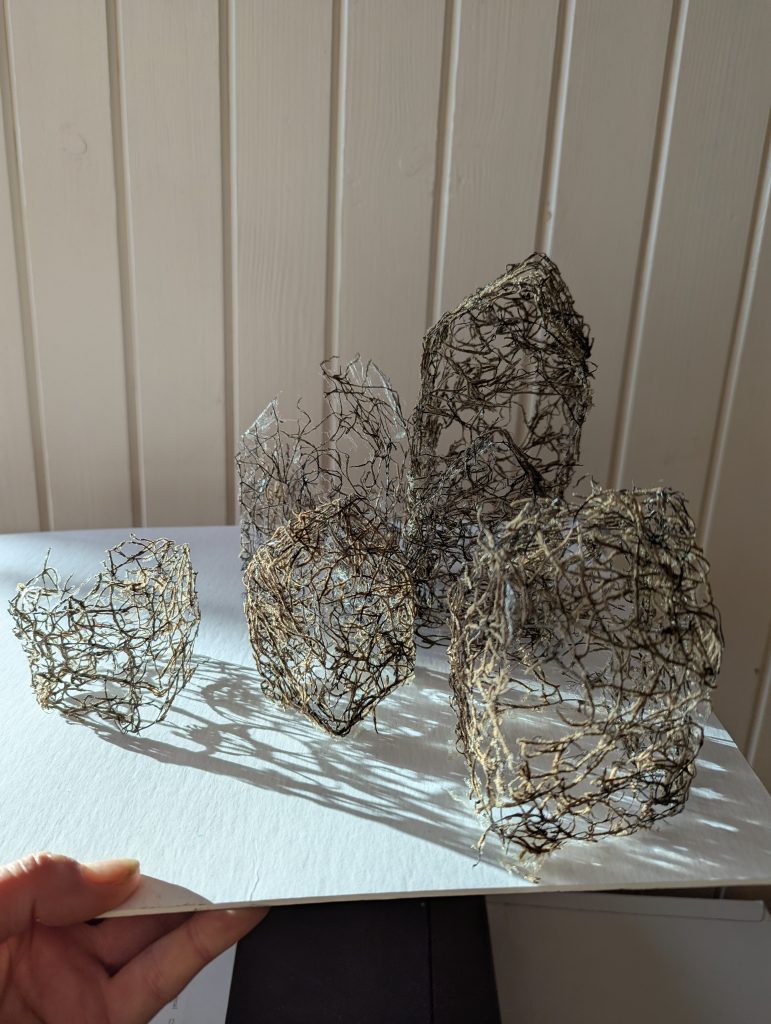
So, Ive been thinking about the ‘nature’ of seamat.
I’ve been fascinated by ‘colonies’ for a long time. An interest in the gatherings of ‘form’ and ‘habit’ across species has been regularly reflected in the work I have produced over the years.
Seamat is one of many species that has a repetitive form I’m inspired by. It’s the species that has finally provided the psychological hook, for an appreciation of species that live in physical forms so different from our own that it is actually almost beyond us to understand how we can
relate to it.
If you can’t relate to it, it is hard to knowingly coexist with it in a way that negates harm, or better promotes benefit. As humans we have the greatest capacity for harm and therefore the greatest obligation to positive environmental stewardship. So, how can we relate
to a species like seamat, that looks like a plant but is in fact an animal? I would suggest the notion of ‘colony’ to the rescue!
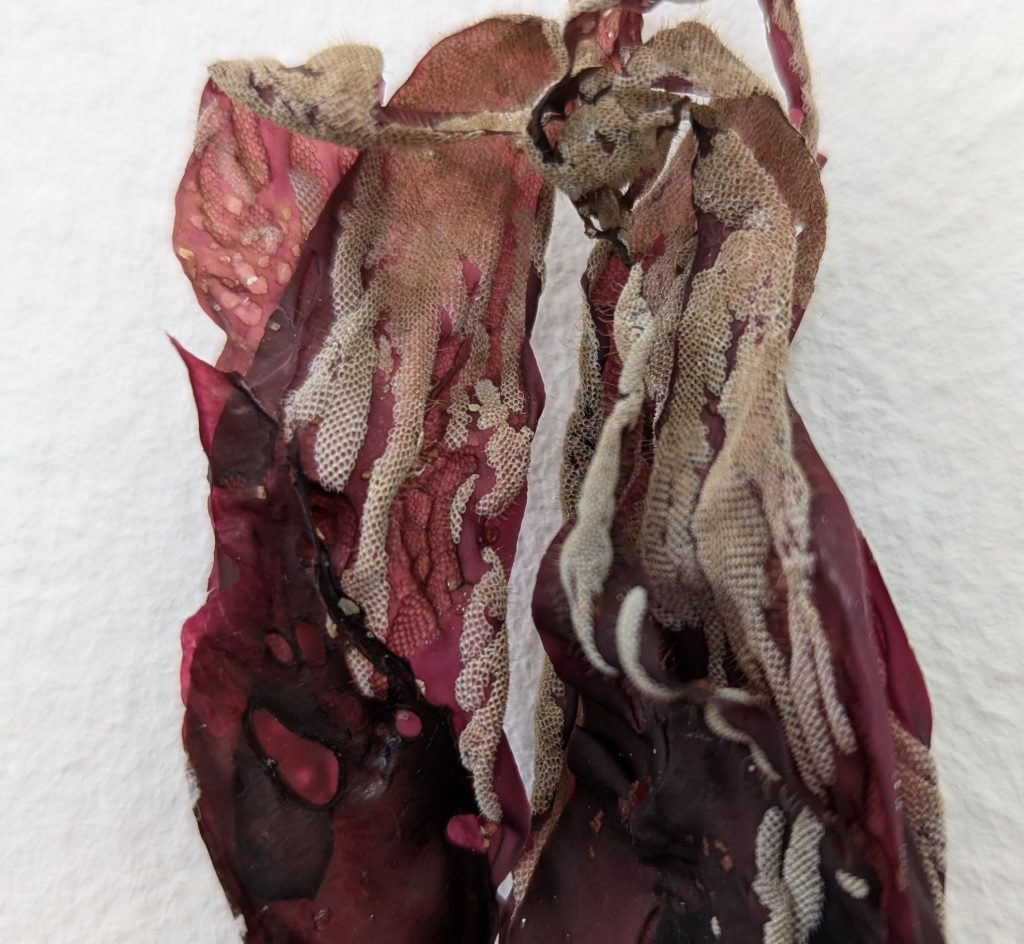
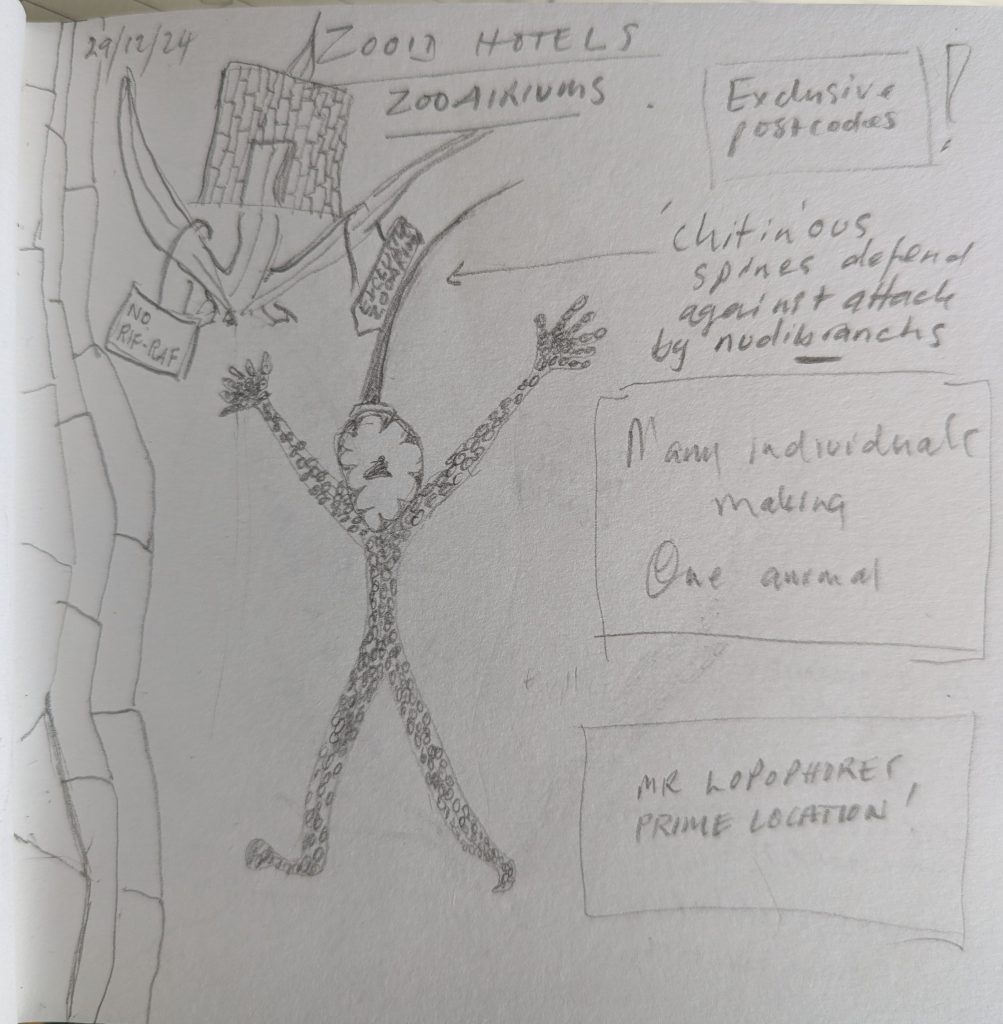
So many species live in colonies. Including us. However, the seamat colony is like no human colony we know.. At first I thought of the cells as like little houses for the animal within. The ‘colony’ as a zooid hotel. I thought that if I looked more closely into the ‘rooms’ of the hotel (the
cells of the colony), that I would see the animal. So,I enlisted the help of Dr Alan Prescott of Dundee University. He helped me look ‘really’ close with a scanning electron microscope.
Thanks Alan.
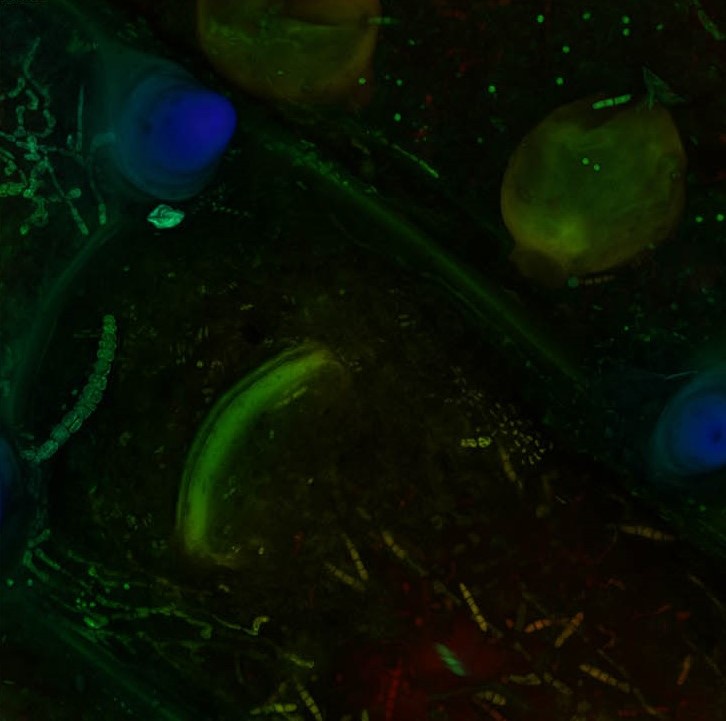
Scanning Electron Microscope image. Seamat maximum intensity.
Looking more closely did not reveal what I expected but helped my understanding of the seamat enormously. I couldnt see the animals in the ‘rooms’. Turns out, the animal is the room! Oh my goodness, what a brain squashing moment.. Not only did it not have arms and legs, now this?!
Amongst it was a stringy brown seaweed the fronds of which, electra pilosa had wrapped itself entirely. Its more common to see it growing flat on brown and red seaweeds with broader fronds. Seeing it growing on a stringy substrate like this gave me an idea for how to approach a first sculpture. A way which I felt would help me capture and visualise the essence of the
seamat, not just its physical appearance.
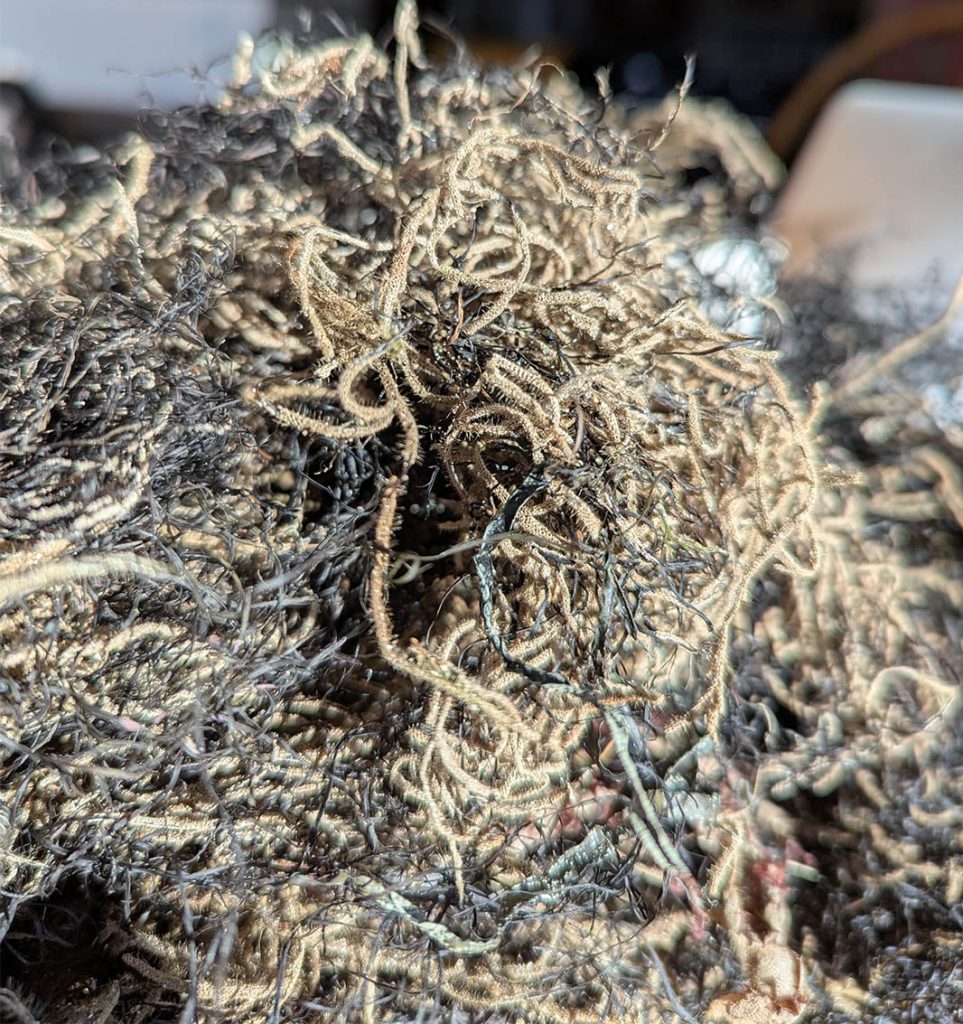
I decided to experiment with using the seamat covered seaweed to form structures which looked like human houses/buildings. I hoped to make a connection between human and bryozoan colonial living, although the houses in the sculpture structure would have no windows.
( I felt this would imply the structures were rooms for something else rather than entities in their own right. Oh dear, probably overthinking it!). The structures would also need to be thin and constructed so as to keep the presence of the seaweed inconspicuous.
I wanted it to look as though the structures were made only of a thin
layer of the bryozoan colony, as they would be alive and in the sea.I wanted the structure to reflect the translucent yet calcified nature of the animal.